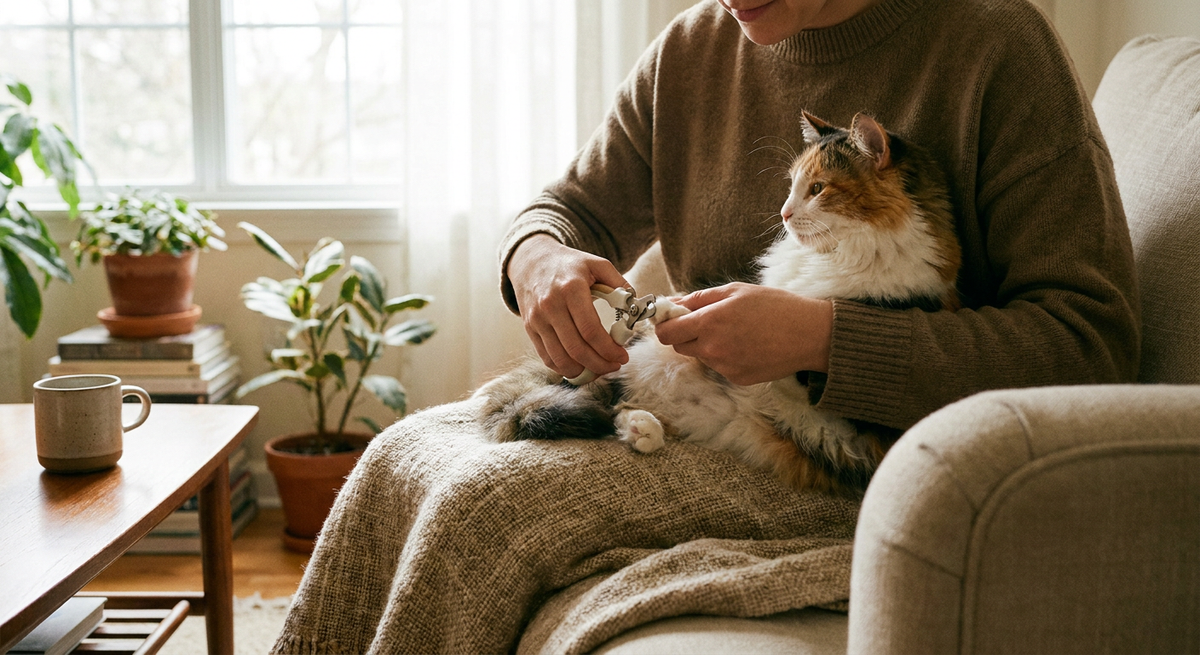
How to Safely Trim Your Cat's Claws at Home
Regular claw trims are an essential part of your cat's grooming routine, helping to prevent painful overgrowth, snags, and damage to your home. Learn how to safely and effectively trim your cat's claws with our step-by-step guide.
In this article
How to Safely Trim Your Cat's Claws at Home
Trimming your cat's claws might seem like a daunting task, but it's a vital part of their overall health and well-being. Regular claw maintenance prevents a host of potential problems, from painful ingrown nails and snags to damage to your furniture and even injuries to you or other pets. With patience, the right tools, and a calm approach, you can learn to safely and effectively trim your cat's claws at home.
Why is Claw Trimming Important?
Cats' claws are designed for hunting, climbing, and self-defense. However, domesticated cats often don't wear down their claws naturally as much as their wild counterparts. This can lead to several issues:
- Overgrowth: Claws can become too long, making it difficult for your cat to walk comfortably, potentially causing pain or even joint problems.
- Ingrown Claws: Severely overgrown claws can curl and grow into the paw pad, leading to painful infections.
- Snags and Tears: Long claws are more prone to getting caught on carpets, furniture, or other items, which can cause them to tear or break, a very painful injury.
- Damage to Property: Sharp claws can easily scratch furniture, drapes, and other household items.
- Self-Injury or Injury to Others: Overgrown claws can accidentally scratch themselves, other pets, or even you during play or handling.
Regular trimming helps keep your cat's claws at a healthy length, promoting comfort, preventing injury, and protecting your home.
Understanding Your Cat's Claws
Before you start trimming, it's helpful to understand the anatomy of a cat's claw. Each claw consists of two main parts:
- The Quick: This is the pinkish, fleshy part of the claw that contains blood vessels and nerves. Cutting into the quick is painful for your cat and will cause bleeding.
- The Sheath (or Tip): This is the hard, outer, translucent part of the claw. This is the part you want to trim.
For cats with light-colored claws, the quick is usually visible as a pink triangle inside the claw. For cats with dark-colored claws, the quick is much harder to see. In these cases, it's best to trim only the very tip of the claw, or consult your veterinarian or a professional groomer for guidance.
Essential Tools You'll Need
Having the right tools makes the process smoother and safer for both you and your cat:
- Cat-Specific Nail Clippers: There are various types, including scissor-style and guillotine-style clippers. Choose a pair that feels comfortable in your hand and is sharp. Dull clippers can crush the claw rather than cut it cleanly.
- Styptic Powder or Cornstarch: This is crucial to have on hand in case you accidentally cut the quick. It helps to stop bleeding quickly.
- Treats: High-value treats are essential for positive reinforcement.
- Towel (Optional): A towel can be useful for gently wrapping your cat if they are particularly squirmy, creating a 'purrito'.
- Good Lighting: Ensure you have adequate light to clearly see the claw and the quick.
Step-by-Step Guide to Trimming Your Cat's Claws
Step 1: Preparation and Acclimation
- Choose the Right Time: Select a time when your cat is relaxed, perhaps after a nap or a meal. Avoid times when they are overly playful or agitated.
- Create a Calm Environment: Go to a quiet, comfortable space where you won't be disturbed. Minimize distractions.
- Introduce the Clippers: Let your cat see and sniff the clippers without any pressure. You can even place them near your cat's food bowl so they associate them with positive things.
- Handle Their Paws Regularly: Start by gently touching and massaging your cat's paws regularly, even when not trimming. This helps them get used to having their paws handled.
Like this? Get a free pet-health digest weekly
One short email with the new articles, food picks, and breed-specific tips. Unsubscribe anytime.
One email a week. We never share your email.
Step 2: Position Your Cat
- Comfort is Key: Hold your cat gently but securely. You might hold them in your lap, have them sit on a table, or even have a helper hold them. The goal is for both of you to be as comfortable and unstressed as possible.
- Gently Extend a Paw: Take one paw in your hand. Gently press on the top of the paw and the paw pad simultaneously to extend the claw fully.
Step 3: Identify the Quick
- Locate the Quick: For light-colored claws, look for the pinkish area. For dark claws, be extra cautious and only trim the very tip.
- Only Cut the Tip: You want to cut only the clear, sharp tip of the claw, well away from the quick. It's always better to cut too little than too much.
Step 4: Make the Cut
- Position the Clippers: Hold the clippers so that you are cutting straight across the tip of the claw, ensuring the blade is sharp and facing away from the quick.
- Make a Quick, Confident Cut: Snip the tip of the claw quickly and smoothly. A hesitant cut can crush the claw.
- Reward Immediately: After each successful snip (or even just extending a paw), offer a treat and praise your cat. This positive reinforcement is crucial.
Step 5: Repeat and Reinforce
- One Claw at a Time: Don't feel obligated to trim all claws in one sitting, especially if your cat is new to the process. Start with just one or two claws, then take a break. Over time, you can work up to doing all of them.
- Front vs. Back Paws: Front claws generally need more frequent trimming as they are used more for scratching. Back claws tend to be shorter and thicker and may not need trimming as often.
- Consistency: Aim for regular trims, typically every 2-4 weeks, depending on your cat's growth rate. The more frequently you do it, the easier it becomes for both of you.
What if You Accidentally Cut the Quick?
It happens, especially when you're learning. Don't panic. If you accidentally cut the quick:
- Stay Calm: Your cat will likely yelp and may pull away. Your calm demeanor will help them calm down.
- Apply Styptic Powder: Immediately apply styptic powder (or cornstarch if you don't have styptic powder) to the bleeding claw. Apply pressure for a few seconds until the bleeding stops.
- Offer Reassurance: Comfort your cat and offer a special treat. Don't continue trimming if they are distressed. Try again another day.
While a quick cut is painful and can be startling, it's generally not a serious emergency unless the bleeding is profuse or doesn't stop. If you're concerned, contact your veterinarian.
Tips for Difficult Cats
Some cats are simply not keen on having their claws trimmed. Here are some strategies:
- Start Young: If you have a kitten, begin acclimating them to paw handling and clippers early.
- Short, Frequent Sessions: Instead of trying to do all claws at once, do one or two claws at a time, several times a week.
- Wrap in a Towel (The 'Purrito'): Gently wrap your cat in a towel, leaving one paw exposed at a time. This can help restrict movement and make the process safer.
- Seek Assistance: Have a trusted friend or family member help hold and distract your cat with treats while you trim.
- Consult Your Veterinarian: If your cat is extremely stressed or aggressive during trims, your veterinarian can offer advice, demonstrate proper technique, or even perform the trims for you. They can also rule out any underlying medical conditions that might make handling painful.
Conclusion
Learning to safely trim your cat's claws at home is a valuable skill that contributes significantly to their health and comfort. Remember to be patient, use positive reinforcement, and take breaks when needed. With practice, both you and your feline friend will likely find the process much less stressful. If you ever feel uncomfortable or unsure, don't hesitate to reach out to your veterinarian or a professional groomer for guidance and assistance.